
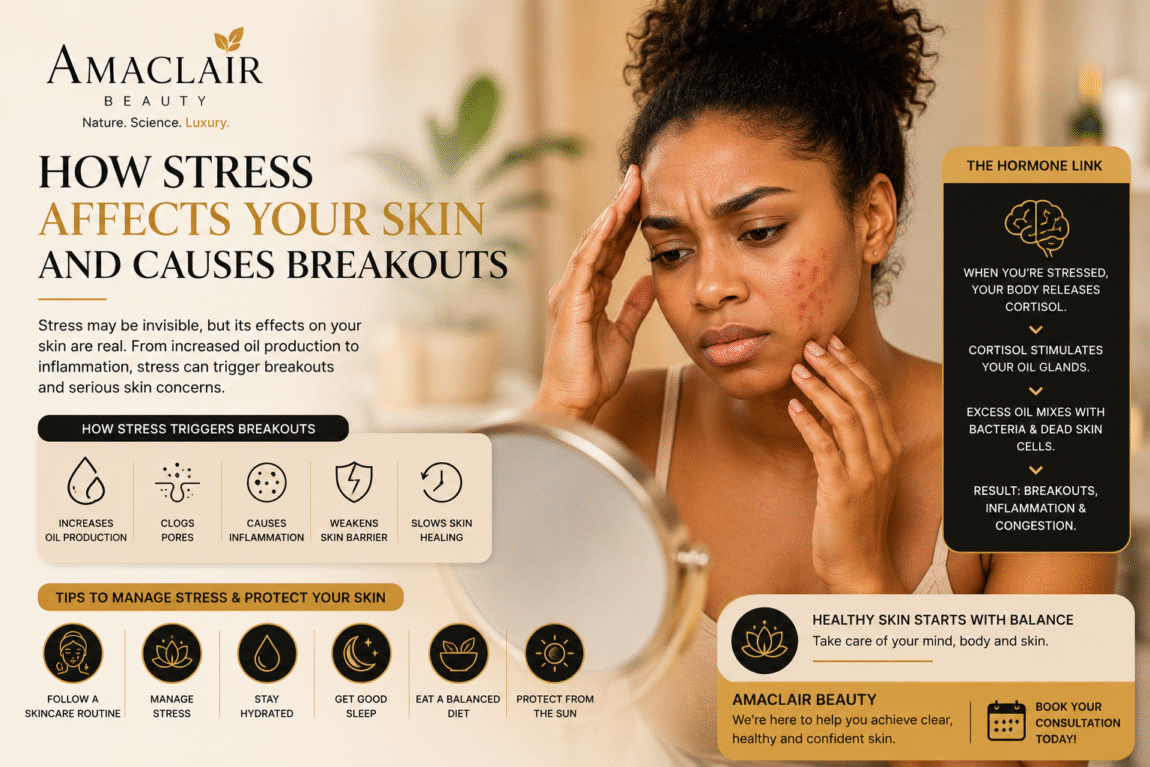
How Stress Affects Your Skin and Causes Breakouts
Want to Know How Stress Affects Your Skin?
Stress doesn’t just affect your mood—it can also impact your skin. Increased stress levels trigger hormonal changes that may lead to acne breakouts, inflammation, sensitivity, and premature aging. Understanding the connection between stress and skin health can help you manage stress-related skin concerns more effectively.
Have you ever noticed that your skin seems to break out right before an important event, during exam periods, or after a particularly stressful week at work?
You’re not imagining it.
The relationship between stress and acne is real, and research continues to show that emotional stress can significantly affect the health and appearance of your skin.
At Amaclair Beauty, we believe that healthy skin starts from within. Understanding how stress affects your skin is the first step toward achieving a clearer, more balanced complexion.
Can Stress Cause Acne?
The short answer is yes.
While stress doesn’t directly cause acne, it can worsen existing acne and trigger new breakouts in people who are already prone to them.
When you’re stressed, your body releases hormones such as cortisol, often called the “stress hormone.” Elevated cortisol levels can stimulate the sebaceous glands to produce more oil (sebum), increasing the likelihood of clogged pores and acne flare-ups.
How Stress Affects Your Skin
Stress can influence your skin in several ways.
Increased Oil Production
Higher cortisol levels encourage the skin to produce excess oil. This extra oil can combine with dead skin cells and bacteria, leading to blocked pores and breakouts.
Increased Inflammation
Stress promotes inflammation throughout the body, including the skin. This can make acne lesions appear redder, more swollen, and more painful.
Slower Skin Healing
Stress may impair the skin’s ability to repair itself. As a result, acne spots, scars, and other skin concerns may take longer to heal.
Weakened Skin Barrier
Chronic stress can compromise the skin barrier, making your skin more vulnerable to irritation, dryness, and environmental damage.
Premature Aging
Long-term stress increases oxidative stress, which can contribute to fine lines, dullness, and a loss of skin elasticity over time.
Common Signs of Stress-Related Breakouts
You may be dealing with stress breakouts if you notice:
- Sudden acne flare-ups during stressful periods
- Increased oiliness
- Breakouts around the jawline and chin
- More inflamed pimples than usual
- Delayed healing of acne lesions
- Increased skin sensitivity
Although stress acne can appear anywhere on the face, hormonal breakouts commonly affect the lower face.
How to Prevent Stress-Related Acne
While it’s impossible to eliminate stress completely, there are steps you can take to protect your skin.
Maintain a Consistent Skincare Routine
A simple routine that includes cleansing, moisturizing, and sun protection can help support your skin barrier.
Choose Products Designed for Acne-Prone Skin
Look for products containing ingredients such as:
- Niacinamide
- Salicylic acid
- Green tea extract
- Azelaic acid
- Zinc
These ingredients can help calm inflammation and reduce breakouts.
Prioritize Quality Sleep
Poor sleep can increase cortisol levels and worsen stress-related skin concerns. Aim for seven to nine hours of sleep each night.
Stay Hydrated
Proper hydration supports healthy skin function and may help reduce dryness associated with stress.
Practice Stress Management
Activities such as:
- Meditation
- Deep breathing exercises
- Journaling
- Yoga
- Regular exercise
can help lower stress levels and improve overall well-being.
Avoid Picking Your Skin
Picking at breakouts increases inflammation and raises the risk of post-inflammatory hyperpigmentation and scarring.
When to Seek Professional Help
If stress-related breakouts become severe, persistent, or begin affecting your confidence, it may be time to seek professional support.
A skincare professional can assess your skin concerns and recommend treatments tailored to your needs.
At Amaclair Beauty, we offer personalized skincare consultations and treatments designed to help you achieve healthier, more balanced skin.
Frequently Asked Questions
Can stress cause acne even if I’ve never had acne before?
Stress is more likely to worsen existing acne, but in some individuals, significant stress may contribute to the development of breakouts.
How long do stress breakouts last?
Stress-related breakouts can last anywhere from a few days to several weeks, depending on the severity of the inflammation and how well the skin is managed.
What is the best treatment for stress acne?
The best approach combines effective skincare with stress management strategies. In some cases, professional treatments may also be beneficial.
Does reducing stress improve skin?
Yes. Managing stress can help reduce inflammation, balance oil production, and support the skin’s natural healing process.
Final Thoughts
The connection between stress and acne highlights the importance of caring for both your skin and your overall well-being.
While occasional stress is a normal part of life, chronic stress can affect your skin in ways that lead to breakouts, sensitivity, and premature aging.
The good news is that with the right skincare routine, healthy lifestyle habits, and professional guidance when needed, you can take control of stress-related skin concerns and restore balance to your complexion.
At Amaclair Beauty, we’re committed to helping you achieve healthy, radiant skin through science-backed, nature-powered skincare solutions that address your unique needs.
Because beautiful skin starts with balance.
Struggling with persistent breakouts or stressed skin?
Book a consultation with Amaclair Beauty and let our skincare experts help you create a personalized plan for clearer, healthier, and more confident skin or Contact us on WhatsApp